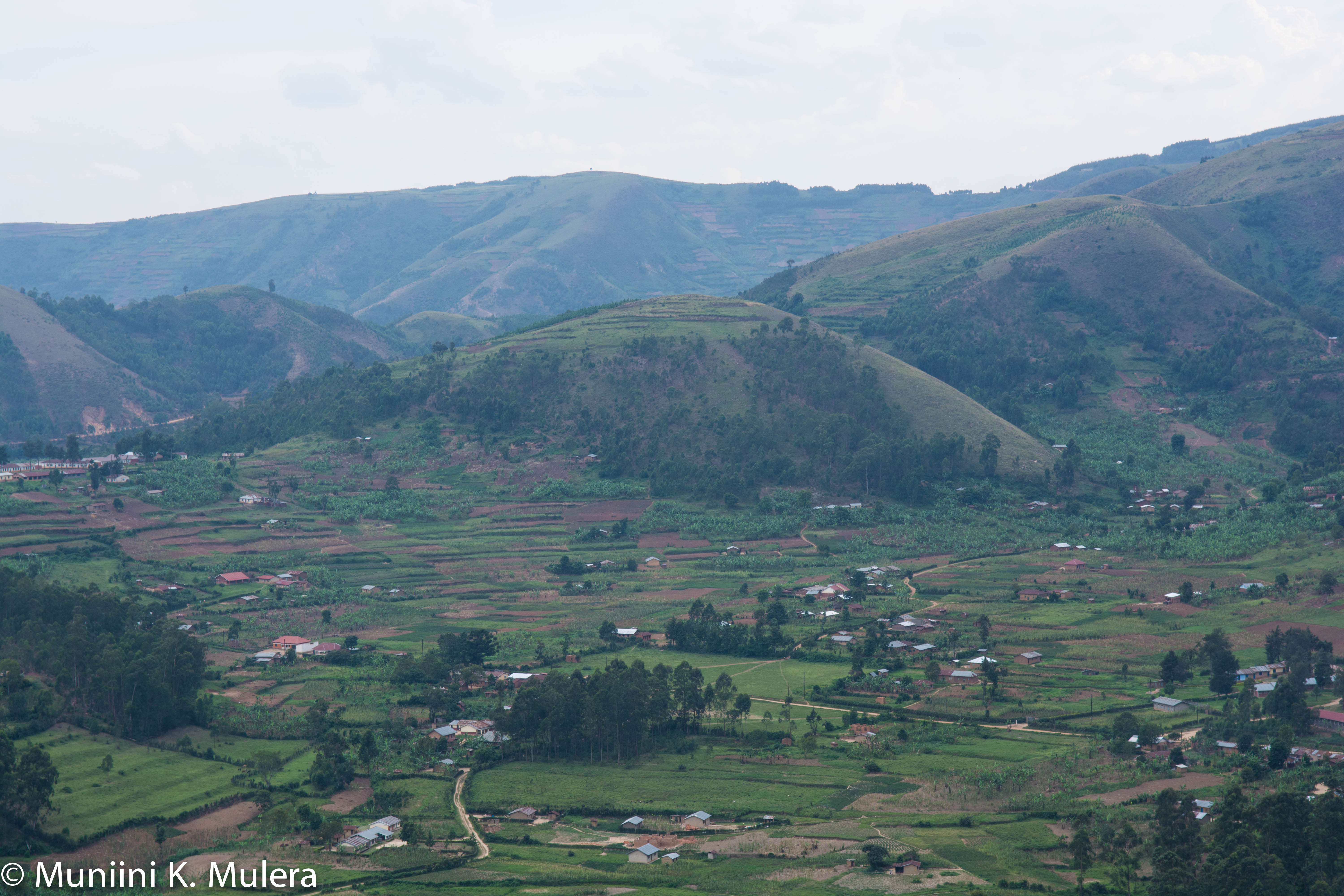
Photo: Mparo, Rukiga District, Kigyezi
The dry spell in southwest Uganda is yielding to the rainy season. The dry, unpaved roads that supplied plenty of harmful dust to travellers and roadside dwellers, are now slippery affairs that challenge even the best sport utility vehicles.
Nestled in the southwestern highlands of Uganda, Rukiga District presents a paradox common to many rural African regions: breathtaking natural beauty overshadowed by pitifully inadequate infrastructure. Since its establishment as an independent district in 2017, Rukiga has grappled with a persistent challenge that affects nearly every aspect of community life—the predominance of unpaved roads.
The district has about thirteen kilometres of tarmacked road surface, most of it an 11-kilometre stretch along the Kampala-Kigali highway. This stretch, originally tarmacked in 1968, starts at the Ankole-Kigyezi border and ends at the Rukiga-Kabale District boundary. Only two kilometres of roads (short stretches in Bukinda and Kamwezi sub-counties) have been tarmacked during the last forty years. This critical infrastructure deficit shapes the daily experiences of the district’s approximately 132,000 residents, influencing economic opportunities, access to services, personal health and overall quality of life.
Rukiga District’s terrain is characterized by steep hills, valleys, and a climate that brings substantial rainfall, particularly during the two rainy seasons. These geographical features, while contributing to the area’s agricultural productivity, create formidable challenges for road construction and maintenance. The majority of the district’s road network consists of murram and earth roads that produce excessive dust during the dry season and become virtually impassable during heavy rains. During the wet season, these roads transform into treacherous mud channels where the most mechanically sound vehicles struggle to maintain traction, often becoming stuck for hours or even days.
The economic implications of this poor road infrastructure are profound. Rukiga’s economy relies heavily on agriculture, with farmers cultivating crops such as Irish potatoes, sorghum, beans, and vegetables on the terraced hillsides. However, transporting produce to markets becomes an expensive and time-consuming endeavour. This reduces profit margins and discourages agricultural investment. Perishable goods frequently spoil before reaching markets, representing not just lost income but wasted labour and resources.
It is instructive to note that most of the senior government officers who work at Rukiga District Headquarters in Mparo live in Kabale District. This understandable vote of no confidence in their assigned district is partly due to poor roads that have kept the place too underdeveloped to attract good social service providers for them and their families. The roads to the district headquarters at Mparo are often impassable during the rainy season.
An often-ignored consideration is the impact of these unpaved roads on the physical health of citizens. Inhaled road dust particles cause severe respiratory illnesses including lung damage, and an aggressive cancer called a mesothelioma. People with pre-existing health problems, children and the elderly are especially at risk. Road dust is also associated with heart attacks and strokes.
Tens of thousands of citizens live in homes that are literally on the edges of these unpaved roads. Hamlets and roadside markets hug these roads, with many dwellers evidently oblivious to the toxic environment in which they live. Many shrug their shoulders when I raise the subject of dust pollution with them.
Healthcare access presents another critical concern exacerbated by unpaved roads. When medical emergencies arise, the journey to health facilities can become a race against time on roads that refuse to cooperate. Expectant mothers facing complications during labour have reportedly been carried on stretchers for kilometres because ambulances cannot reach remote villages. An ambulance ride on the roads to Kisiizi Hospital, an excellent health facility in Nyarushanje subcounty, is a hellish experience for a woman in labour or a patient with injuries and other painful illness.
During the rainy season, patients with chronic conditions may miss essential treatments simply because the roads are impassable. This infrastructure gap contributes to preventable maternal and infant mortality and limits the effectiveness of public health initiatives.
Education similarly suffers under the burden of poor road conditions. Students often walk several kilometres to reach schools, a journey that becomes hazardous during rains when paths turn muddy and slippery. Teachers assigned to rural schools may be reluctant to take up their posts or frequently absent due to transportation difficulties.
The social fabric of communities also bears the strain of inadequate roads. Young people, seeing limited opportunities due to poor connectivity, increasingly migrate to urban areas, contributing to brain drain and labour shortages in the district.
Rukiga District requires very urgent attention by the Uganda Government. The district should be classified as a “hard-to-reach” and “hard-to-stay area.” A sustainable investment and strategic plan, prioritizing all-weather road construction, particularly for routes connecting health centres, markets, schools, and the district headquarters would yield significant returns in human development and economic growth.
Four roads that President Yoweri Museveni has repeatedly pledged to tarmac over the last thirty years, need prioritizing for final actualization. These are: (1) Muhanga-Rushebeya-Kisiizi-Kebisooni; (2) Rushebeya-Mparo-Noozi-Nyamweru-Kakondogoro on the Kabale-Kisoro highway; (3) Kangondo-Sindi-Rukiri-Kabale; (4) Muhanga-Rutobo-Kamwezi-Rwamatunguru.
The president has often justified the failure to fulfil those pledges “because the people of Rukiga have sent the wrong representatives.” This has been the president’s way of blaming Banyarukiga for electing non-NRM members of parliament. The president will be pleased that Patrick Katabaazi and Sylvia Alinaitwe, two solid NRM members, are the newly elected MPs from Rukiga. Rukiga District should now enjoy the gains of the struggle for which many of her sons and daughters sacrificed their lives to bring Gen. Museveni to power.
David Kagoro Kangire, a FRONASA guerrilla fighter that was publicly executed by the Idi Amin regime on February 10, 1973, was born and raised in Mparo. The road that passes by his home in Kasooni is a pathetic path that becomes treacherous to cows and humans during the rainy season. A tarmacked highway should be named in his honour.
Col Anthony Kyakabale, famed for his role in the attack on Kabamba barracks on Tarehe Sita February 6, 1981, lies buried at his birthplace in Nyakarambi, Mparo. Maj. Gen. Henry Masiko wa Ndarubweine, one of the most consistent NRM ideologues and mobilizers is a son of Mparo. An attempt to visit his home on Kihanga Hill during the rainy season is a foolhardy undertaking. This is a very small sample of the people whose sacrifices enabled the gains of the Museveni era.
Rukiga District’s unpaved roads represent more than an infrastructure challenge. They embody the broader struggle of rural communities seeking development and prosperity. While the district possesses agricultural and tourism potential, abundant entrepreneurial spirit, and rich cultural traditions, these assets remain constrained by the inability to move freely, safely, and affordably. Addressing this fundamental infrastructure gap is not merely about laying tarmac—it is about connecting communities to opportunities, services to those in need, and potential to realization.
Until the roads improve, Rukiga’s journey toward sustainable development will remain as difficult as navigating its muddy slopes during the rainy season. The ball is now in the courts of Rukiga’s newly elected MPs and the president.
© Muniini K. Mulera